


For the past three years, we’ve asked the same question: Is generative AI a viable business? That might sound dumb, as generative AI revenues have exploded. However, so too have generative AI losses. Take it from Elon Musk, who just admitted that the Grok Bot business model isn’t working.

“We’re still early,” I know. But not that early. It’s been four years since ChatGPT launched, and not one pure-play LLM-maker has demonstrated an ability to make more than it spends. That doesn’t mean AI companies are doomed; it just means they’re unproven. And with trillions of dollars on the line, proof matters.
That’s why Anthropic’s recently released IPO filing was so important. It was our first proper look at whether the LLM-making business actually works. On first look, the answer was yes. Revenue grew roughly 1,200%, to $33 billion, through the first nine months of the year, and more importantly, operating losses sank by about 75%. That’s a great signal that the most valuable AI startup in the world is about to become profitable.
But then I read the fine print. While it’s true that Anthropic narrowed its losses this year, that’s not going to last. Why? Because they’re about to spend more money than you could ever comprehend. This is what investors are missing: Not only will Anthropic not be profitable next year, it will likely be more unprofitable than ever before. When capital is cheap and seemingly infinite, that’s no problem. However, that’s all about to change as well.
Committed
First, an explainer on Anthropic’s spending. Despite its rosy income statement, the full story is buried in the “liquidity and capital resources” section of the S-1. There, we learn about its purchase commitments, i.e., the amount of money Anthropic has promised to spend on compute in the future. The original filing left the total blank. The amended version, released yesterday, filled it in: $895 billion, nearly all of it on compute. In other words, Anthropic’s costs are about to explode.
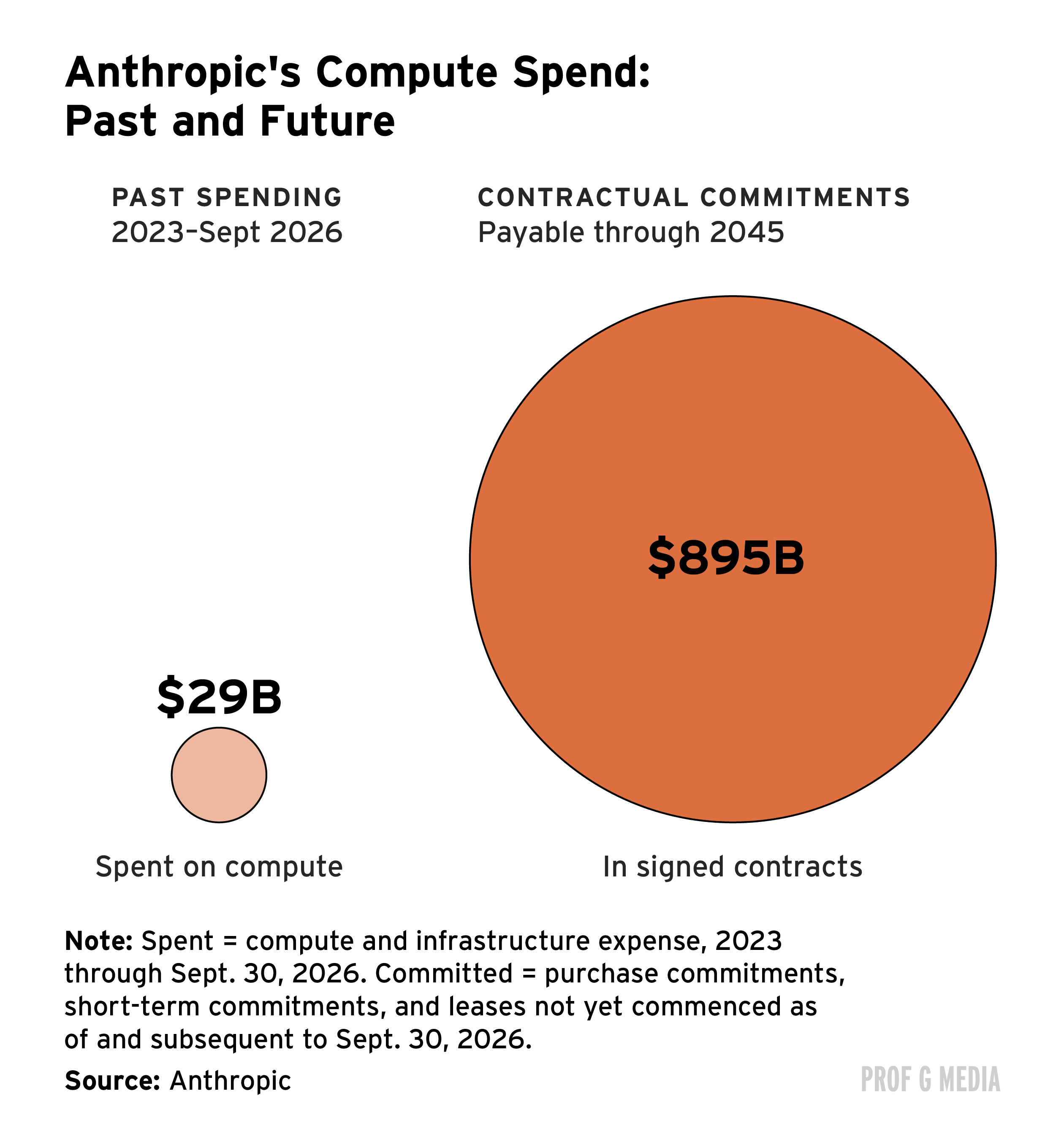
Over how many years, exactly? Good question. Roughly $70 billion of those commitments must be paid in the next 12 months, and another $450 billion is due by the end of 2030. Do the math, and you’re looking (conservatively) at compute bills of more than $100 billion per year, starting next year. Compare that to the $19 billion they’ve spent this year, and you realize this business is about to become unrecognizable (and not in a good way).
Can they back out of these contracts? Only some of them. Some $437 billion of the spending is non-cancellable, with Broadcom describing its contract terms as “absolute and unconditional.” To put $437 billion in context, that’s more than the entire company was worth less than eight months ago.
This isn’t to say the company is “bad.” It simply means that the notion of imminent profitability implied by the income statement is not only a red herring, but also a gross misrepresentation of what the business is about to look like. It won’t just be unprofitable — it will be deeply unprofitable. And, by the way, Anthropic admits this. Per the filing, “our increasing efforts to build out our compute and infrastructure require substantial capital expenditures” that are “changing the cash flow of our business.” Translation: Massive losses are on the way.
So, if Anthropic is about to lose gobs of cash, who will provide the money? Answer: You. Although the company has a staggering war chest of more than $130 billion, its costs will be more staggering. That is why it’s going public. Anthropic needs to raise money, because if it doesn’t, it won’t be able to pay its bills.
Dependent
A company going public for financing reasons is not unique. What is unique, however, is how much Anthropic is raising: roughly $100 billion. That’s already enormous, but it’s especially enormous when you realize how much money everyone else is raising too.
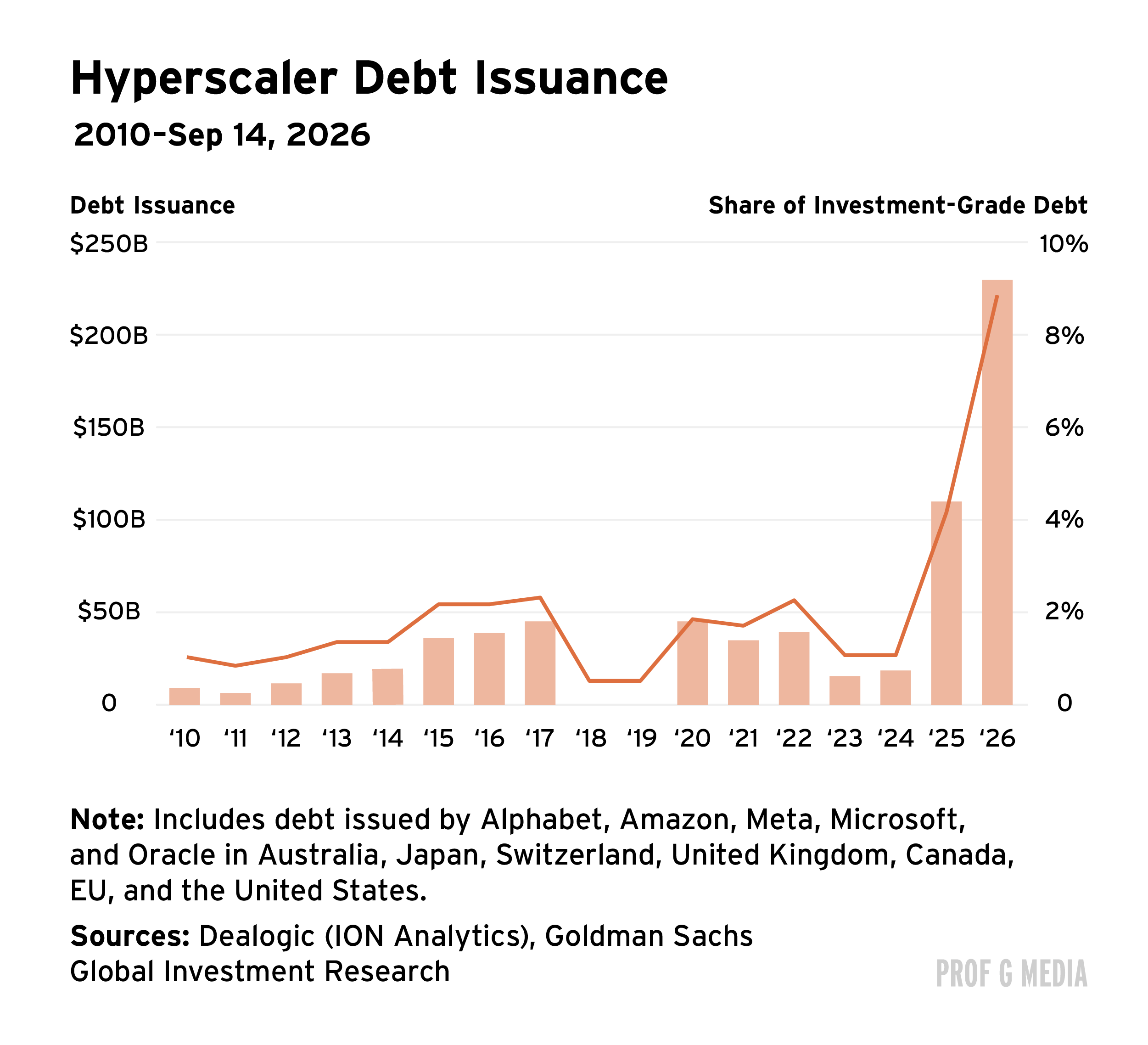
Over the past 10 months, the hyperscalers (Microsoft, Meta, Amazon, Google, and Oracle) have raised more than $300 billion in debt and equity. The reason they’re doing this is to build data centers, and while that number might sound crazy (it is), just know that next year’s will be crazier. Meta has planned another $60 billion equity offering in 2027, and Morgan Stanley estimates that hyperscaler debt issuance could exceed $1 trillion by 2028. Put another way, the true test of capital won’t be 2026, but 2027.
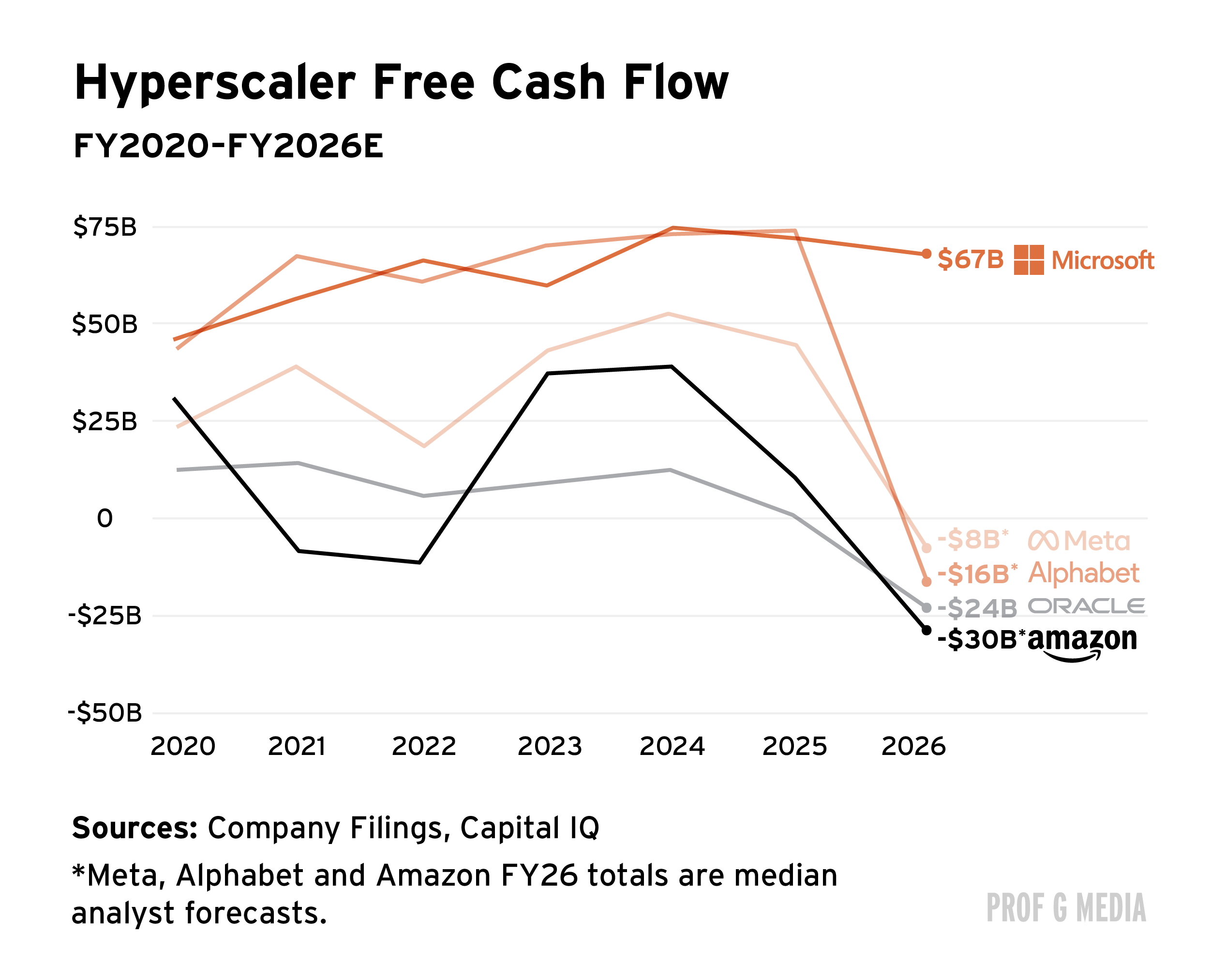
The more important question, however, is why cash cows like Amazon and Google need more money. Aren’t they already ridiculously profitable? Increasingly, the answer is no. Due to the $800 billion they spent on AI this year, every hyperscaler aside from Microsoft is now cash flow negative. This is remarkable, considering these companies are known as the most profitable businesses in history.
That’s where you come in. Over the past several years, very few companies have asked you for money — IPO issuance has been historically low, and existing companies have been happy to finance operations on their own. But that’s all about to change. All of a sudden, many of the world’s most valuable companies need hundreds of billions of your dollars, all at once.
This is very unlike Big Tech, whose profits have historically been so strong that the very notion of asking for anything would have been seen as an admission of defeat. The AI era, however, is very different. We’re all in this together now. Financial independence is a relic of the past.
When The Music Stops
The trouble with needing money is it makes you extremely vulnerable when people are no longer willing to be generous. It’s like being a kid — your fate is in someone else’s hands. The good news for kids is that most parents are willing to help no matter what. Companies, however, don’t have that luxury. Investors will let them die.
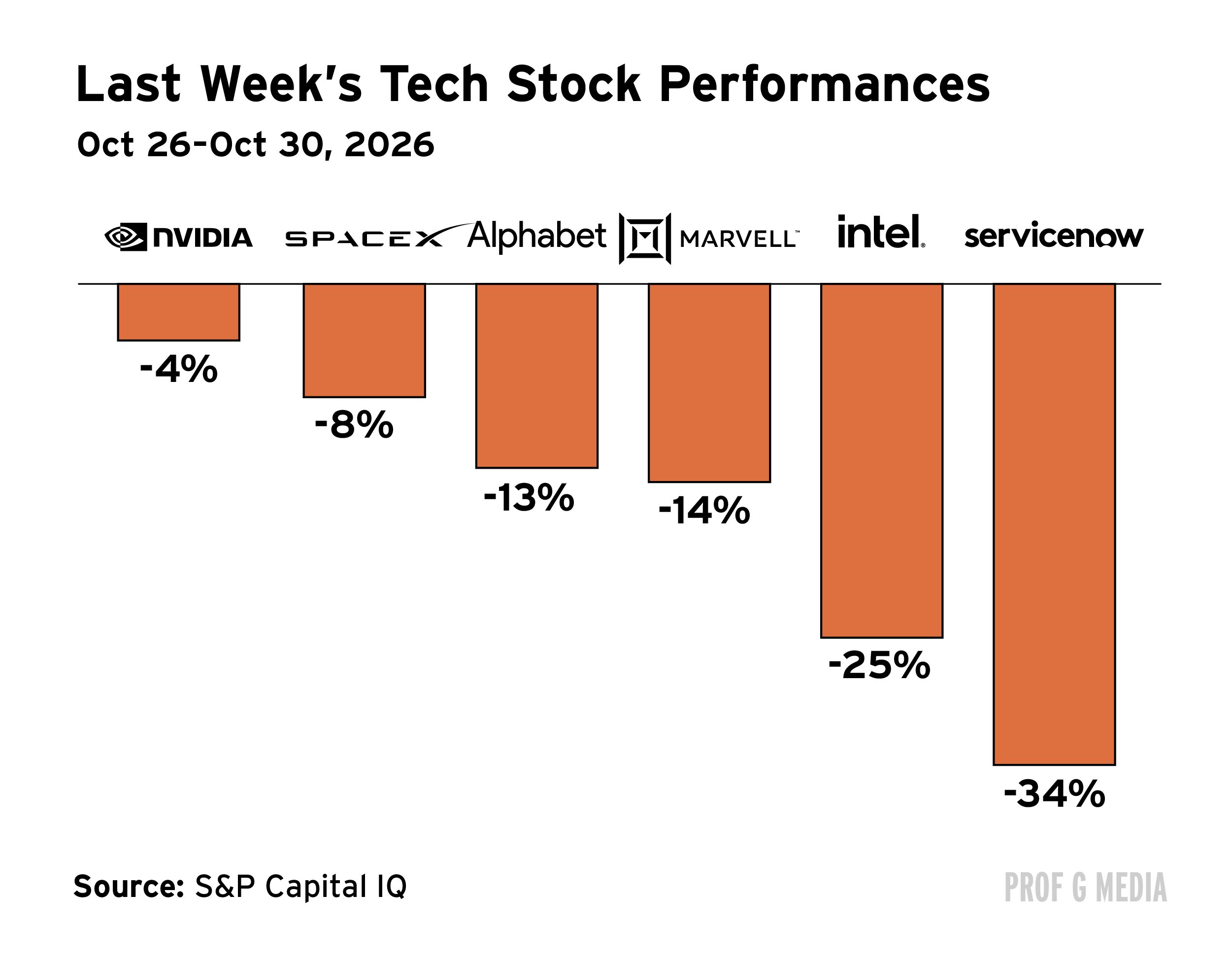
Last week, we got our first taste of what that might look like. After Big Tech reported (solid) earnings, investors got the AI jitters, largely in reaction to how much money these companies continue to spend. Google plummeted more than 10% overnight, erasing roughly $500 billion in market value. Intel fell more than 25%, its worst week ever. It was a bloodbath. But that’s what happens when investors get anxious. They become harder to please and easier to frighten.
On Wall Street, this emotional state is known as the “music.” It became especially famous in July 2007, when Citigroup’s CEO, Chuck Prince, told investors that when “the music is playing, you’ve got to get up and dance.” In other words, don’t shy away from an exuberant market. Four months later, however, the housing bubble popped. Citigroup had to write down billions of dollars in losses, and Chuck Prince was removed as CEO. He was right about what to do when the music was playing, but wrong about when it would stop.
The obvious question for investors is how the music sounds right now. As always, it’s hard to tell. One thing that’s for certain, though, is that it’s playing. Meta’s recent $25 billion stock sale was five times oversubscribed, Amazon’s $25 billion bond deal drew $62 billion in orders, and Microsoft just pulled off one of the most sought-after debt offerings on record. That is not the sound of silence.
At the same time, some of the music’s starting to go out of tune. In the past month, CoreWeave’s bond yields have exploded to 15%, and many neoclouds have seen their valuations get cut in half. Meanwhile, the Financial Times reported that Anthropic will not receive the investment-grade credit rating it wanted (hello junk status), and OpenAI just slashed its funding target by $10 billion. In both cases, exuberance was lower than previously anticipated. These aren’t signs that the party’s over, but they do suggest the lights are coming on.
Our greatest musical signal, however, will be the Anthropic IPO, set to take place within the next two weeks. The expectation is that demand will be through the roof, which means the stock should rocket upward as soon as it lists. That’s exciting for Anthropic, but also terrifying, as anything less will be seen as evidence that something’s gone wrong.
The trouble with capital markets is they’re temperamental and moody. They’ll fall for you just as quickly as they’ll turn you away. That’s why you should never depend on them. Yes, they’ve been very generous over the past few years. But that’s because the MDMA has been hitting, and the music has been blaring. Everyone’s nice in that environment. I get the sense, though, that the drugs are beginning to wear off, and the sun is starting to rise. As for the music? I hear it, but it’s getting fainter.
See you next week,
Ed
P.S. If you want to hear more about the Anthropic S-1, Prof G Research Lead Mia Silverio and I recently broke it down in a deep dive for the Extra Credit newsletter. Prof G+ subscribers can watch here.
Really solid analysis of something we all feel but can’t understand. Grazie.
Going from self funding to relying on public markets is the true regime change here. The amended filing makes it pretty obvious this is a giant cash call to cover future compute bills.